Why we renamed OpLevel to Polyform
We recently renamed the company from OpLevel to Polyform.
This was not just a cosmetic change. It came from a deeper realization about the company we are building, the way we think about data, and how our consultancy evolved into something much bigger.
There were three main reasons.
OpLevel was not working as a name.
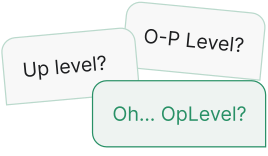
People pronounced it a bunch of different ways. Some called us UpLevel. Some called us O-P Level. Some understood the pun we were going for, but most people did not.
And when you have to explain your company namebefore you explain your company, that is usually a sign something is off.
We wanted a name that felt cleaner, easier to say, and more aligned with the way we actually think about the work.
Apolyformis a mathematical idea: simple shapes that can be reused and recombined to create many different forms.

That idea felt incredibly aligned with how we think about data.
At the core of our approach is Activity Schema. Instead of treating every dashboard, metric, workflow, AI answer, and customer question as a one-off project, we think in reusable building blocks.
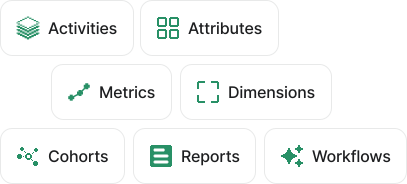
The power is in the repeatability.
Once the building blocks are clean and consistent, they can be combined in many different ways. The same foundation can support reporting, customer journeys, AI workflows, operational systems, webhooks, applications, and more.
That is the magic we kept seeing with customers.
They would start with one use case, then realize the same underlying model could unlock ten more. The data did not need to be reinvented every time. It needed to be structured well enough that it could be reused.
That is what Polyform represents.
Same building blocks.
Many possible forms.
The company itself evolved.
We are still a consultancy. That remains a huge part of who we are. We work deeply with customers, help them structure their data, build analytical systems, create reporting, operationalize AI, and solve difficult problems.
But over time, while doing that work, we kept running into the same issue.
Companies had too many tools.
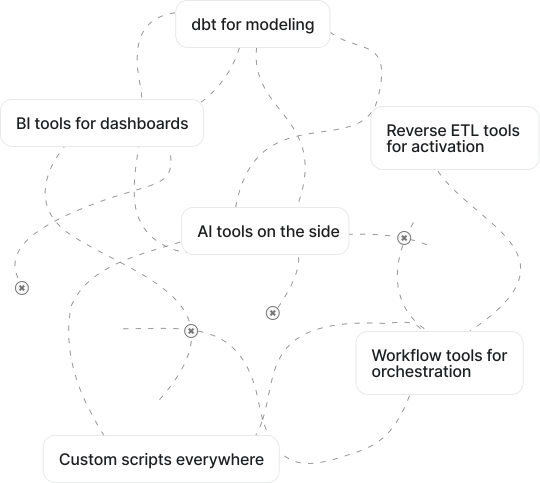
And then customers would ask us:
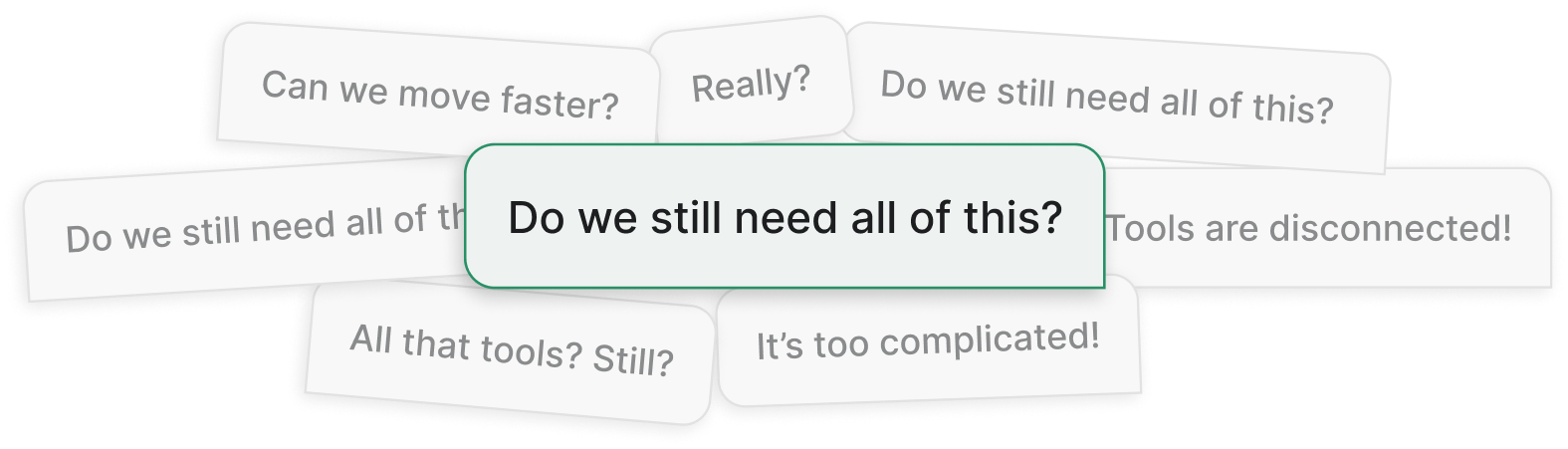
As consultants, we were constantly moving between disconnected systems, debugging tool boundaries, and managing complexity that did not actually help customers move faster.
So instead of continuing to stitch together dozens of external tools, we started building the internal platform we wished existed.
A system built specifically for how modern data consulting and AI-enabled operations actually work.
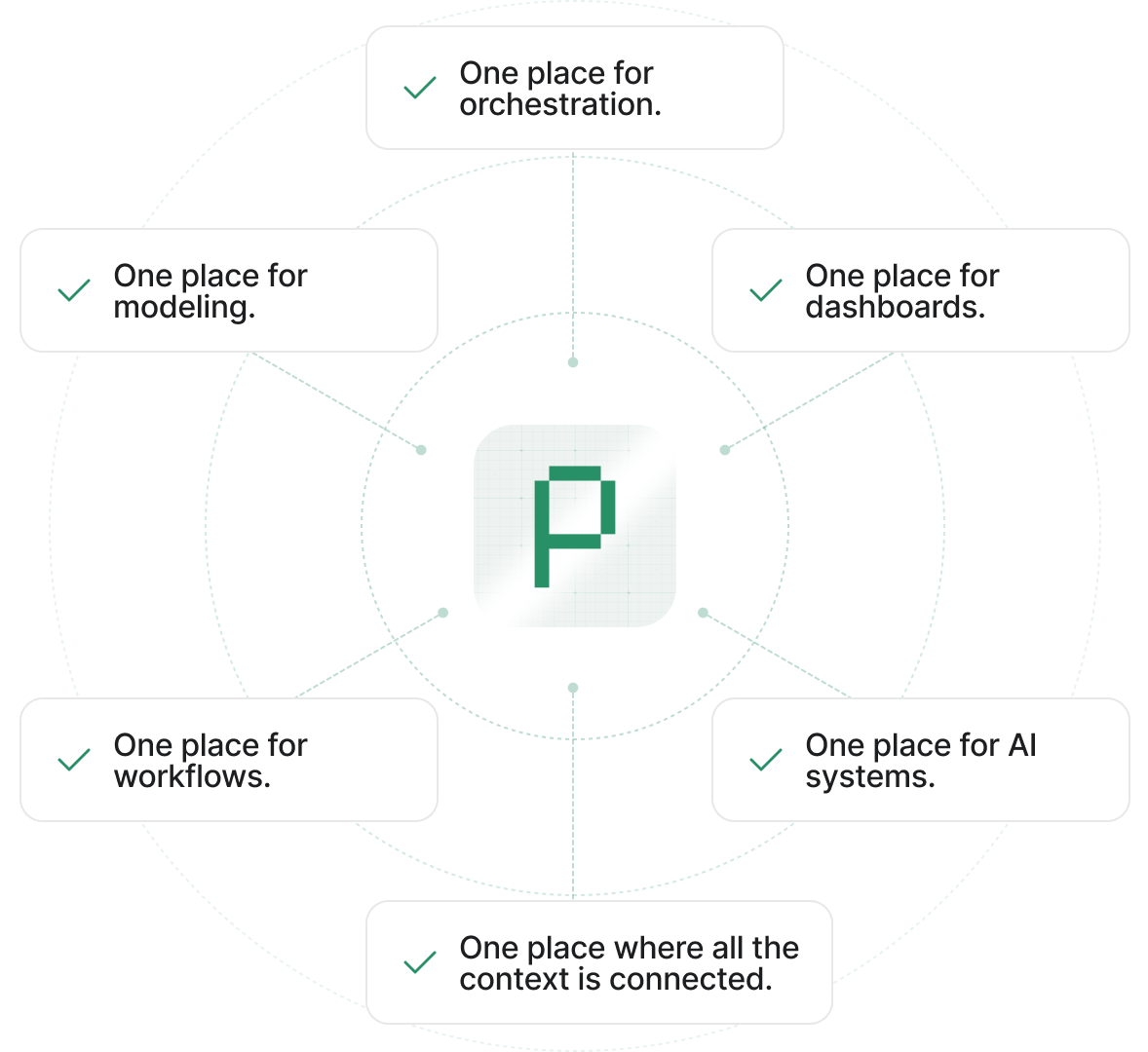
And that decision unlocked something much bigger than we expected.
We found AI became dramatically more useful when it had context. When the system understands your dashboards, your definitions, your metrics, your past work, your workflows, and your data model, the quality of the outputs changes completely.
It stops feeling like a disconnected chatbot.
It starts feeling like an intelligent system embedded into your company.
What surprised us even more was that other consultancies started wanting the same thing. They saw the same challenges we saw: too many disconnected tools, too much duplicated work, and too little shared context.
So while we are still very much a consultancy, we are now also launching the fully featured platform that came out of doing that consulting work at scale.
And honestly, that shift deserved a new name.
So, why Polyform?
Because the old name was hard to say.
Because the new name better represents our philosophy: reusable building blocks that can become many different things.
And because our consultancy evolved into both a methodology and a platform — one designed to help teams model, orchestrate, report, automate, and reason with their data in one connected system.