Polyform is positioned between consulting, software, and AI —and stronger because of it
The right way to understand Polyform is not as another BI vendor or another consulting agency. Polyform is a data consulting firm with its own platform and a clear operating model.
Multiple people. Multiple tools. More complexity.
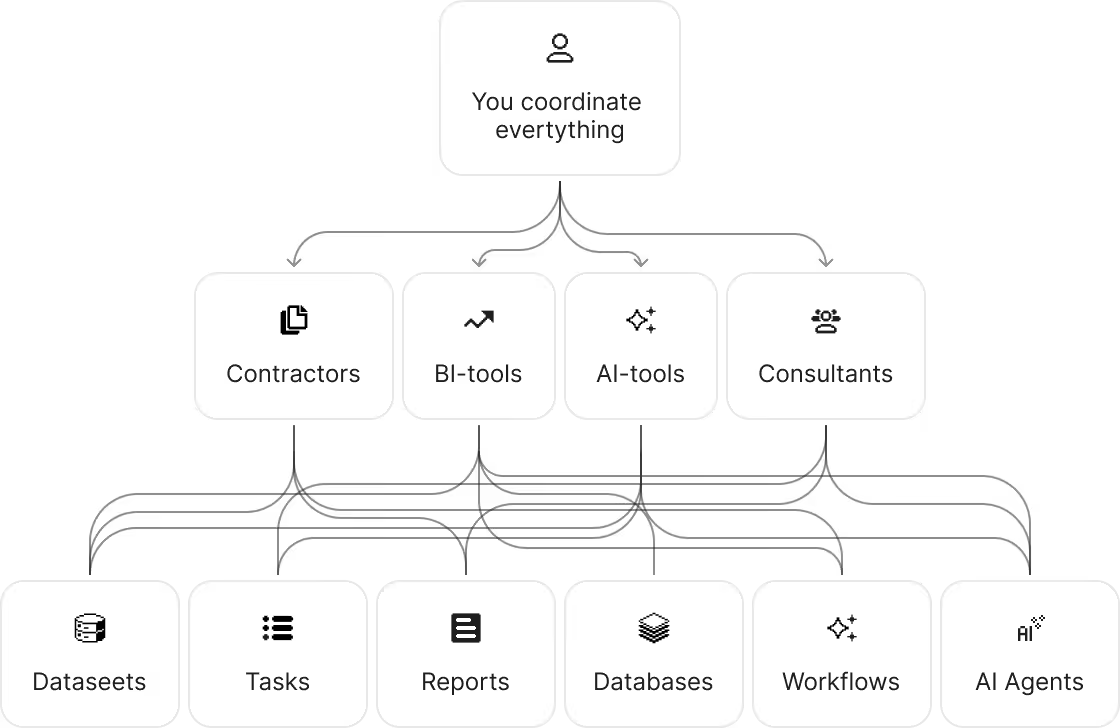
$$ + $$ + $ + $ + $
Manual Connections. More complexity. Harder to scale
One partner. One platform. Built for AI.
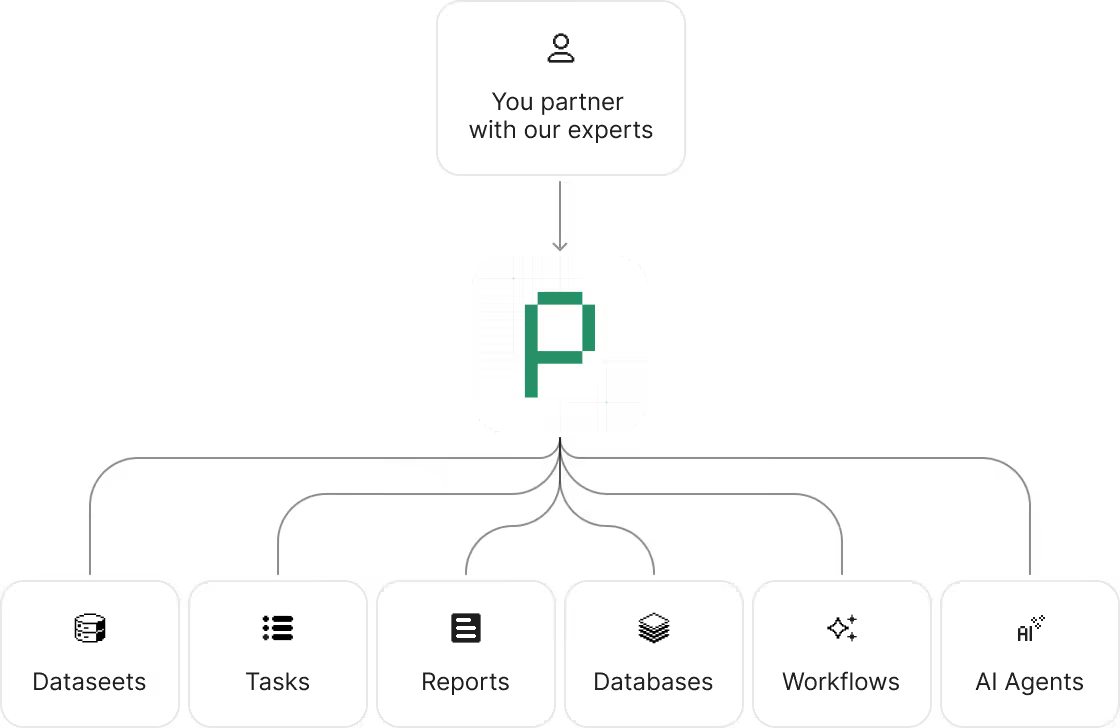
$$
One system. Ready to scale.
Setup
Data flow
Workflows
AI integration
Maintenance
Time to value
Team dependency
Polyform
One unified platform
Centralized, consistent data layer
Built-in, asynchronous workflows
Native, data-driven AI workflows
Minimal maintenance, stable system
Fast, ready to operate
Lean teams, fewer dependencies
Others
Multiple tools to configure and maintain
Fragmented pipelines across systems
Manual orchestration and glue code
Disconnected tools and prompts
Ongoing overhead and breakage
Slow, requires coordination
Large data/engineering teams
Polyform is built for speed, reliability, and real-world AI systems.
Best for companies that care about accuracy, speed, and doing more with data
Polyform works best when clients want an accountable partner to own the operating model, not when they want incremental patchwork on top of a stack they already know is too messy.
Great fit
Growing companies without a strong in-house data team
Teams that care deeply about accuracy, speed, and trust
Organizations that want AI grounded in warehouse data
Leaders who want one accountable model over many vendors
Not the best fit
Teams that want to preserve a large, messy dbt estate
Organizations that prefer stitching together point solutions
Companies looking for a narrow one-time dashboard project
Teams unwilling to adopt a more opinionated system design
How Polyform is different
Compared to building your own team
You could hire analysts, engineers, AI specialists, and operators. Or work with one system that has all the context allowing faster cheeper answers.
Polyform
Internal team
Compared to traditional consultants
Traditional consultants are incentivized to complete projects as quickly as possible. Polyform builds systems it must maintain and operate, creating stronger foundations and continuous delivery of insights.
Polyform
Traditional consultants
Compared to AI consultants
Most AI consultants focus on pulling data and wrapping it in prompts. This approach becomes brittle as data grows. Polyform builds directly on the warehouse using an AI-ready Activity Schema, producing more reliable and scalable AI outcomes.
Polyform
AI consultants
Compared to BI tools
AI in traditional BI tools was bolted on top of dashboards. Polyform's AI-first design allows AI to understand reports, decisions, tasks, meetings, definitions, and pipeline logic. This enables users to ask why and how, not just summarize numbers.
Polyform
Traditional BI tools
Best for companies that care about accuracy, speed, and doing more with data
Polyform works best when clients want an accountable partner to own the operating model, not when they want incremental patchwork on top of a stack they already know is too messy.
Great fit
Growing companies without a strong in-house data team
Teams that care deeply about accuracy, speed, and trust
Organizations that want AI grounded in warehouse data
Leaders who want one accountable model over many vendors
Not the best fit
Teams that want to preserve a large, messy dbt estate
Organizations that prefer stitching together point solutions
Companies looking for a narrow one-time dashboard project
Teams unwilling to adopt a more opinionated system design